This category is about all aspects of Holiday Home Insurance and will be of interest to owners of holiday homes, cottages and holiday complexes across the UK. As Holiday Home Insurance Specialists Boshers are experts and provide tips and guidance. Check out these posts, Holiday Homes – getting your Buildings Insurance Right, Dog Friendly Holiday Home Insurance, How much should your holiday home insurance cost?, Frequently asked holiday home insurance questions, Getting your Holiday Let Insurance Right – Public and Employers Liability

Holiday home insurance specialists, Boshers Ltd advise furnished holiday let owners to review their cover and in particular to check that sums insured are correct. Mark Lavington, Director of Boshers Ltd said that, “many holiday home owners will find that their holiday home insurance falls due for renewal during the Spring and early Summer as this is often when properties were purchased or began their life as furnished holiday lets. This is therefore a poignant time to ensure that you have sufficient cover”.

Suitable holiday home insurance will give you peace of mind should the worst happen, however you’ll need to ensure the correct buildings and contents sum insured are specified to ensure the right amount of cover is provided as the implications of underinsurance can be costly.

Holiday Home Insurance. Are you fully covered?

Underinsurance

It is important not to underinsure your holiday home property or its contents. This is because if you only insure for say, 50% of the reinstatement value of your property or contents you stand to have any claim payment reduced by half and you will be considered as your own insurer for the difference and thus bear a rateable proportion of the loss accordingly. The guidance below will help you calculate the correct figures and avoid the potential for underinsurance.

Rebuilding Costs

Your holiday home buildings sum insured should represent the amount that you would have to pay to rebuild your holiday home again should there be a total loss e.g. in the event of a fire. This should include the cost of rebuilding boundary walls or fences, reinstating driveways and outbuildings. Internally you will need to consider fixtures and fittings such as built in bedroom furniture, kitchens and bathrooms as well as redecoration, basically everything that is fixed and would be left behind if you sold the property.

The Association of British Insurers’ (ABI) rebuilding cost calculator is designed to help you assess the rebuilding cost of your property, if it falls within a range of standard house types. There is of course no substitute for instructing a professional Surveyor to prepare a Rebuilding Cost Assessment for insurance purposes. The RICS web site can be used to search for a Chartered Surveyor (http://www.ricsfirms.com/) in your area.

Index linking

Because your holiday home insurance buildings sum insured is index-linked (i.e. it’s adjusted according to inflation), if the worst happens and the sum insure is sufficient your claim will be paid in full up to the sum insured. It is none the less, important that the sum insured as well as being correct at outset, is also increased to reflect improvements that you make to your holiday home, such as adding an extension, conservatory or a designer kitchen or bathroom.

Contents Calculator

Your holiday home contents sum insured is the total value of replacing your holiday home contents with new items, should there be a total loss e.g. in the event of a fire. It’s important that your sum insured is correct so that your insurer can quickly pay any insurance claims you make.

The most effective way of working out your contents sum insured is to draw up an inventory of all the contents in your holiday home, room by room. Against each item write the replacement cost for a similar brand new item. The contents of your holiday home includes everything that isn’t fixed, which you would take with you if you sold and interestingly also includes carpets, so ensure that you allow sufficient to re-carpet throughout. In respect of books, works of art, television and audio visual equipment a single article limit may apply, be sure to check that you have sufficient cover and for items exceeding these limits please refer to your broker for further advices. Index linking may apply to the contents section of your Holiday Home Insurance policy; however it is important that you ensure that the sum insured is sufficient at outset and each renewal. In today’s market this is particularly pertinent as competition for guests dictates that holiday homes are increasingly furnished to a high standard and equipped with expensive flat screen televisions and accessories such as hot tubs and home gyms.

Loss of rental income

A quality Holiday Home Insurance policy should provide cover for loss of rental income, for insured perils which consequently render the holiday home uninhabitable for a period during which the property is repaired. As it may take some time to rebuild a holiday home levelled by fire or damaged by flooding; cover should be considered for up to two years. Check that your loss of rental income sum insured is sufficient and that your projected gross holiday letting income does not exceed the cover provided.

Should you require any additional guidance or a holiday home insurance quote, please contact a member of Boshers Holiday Home Insurance Team on 01237 429444.

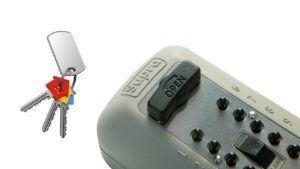
Key Safe holiday home

Security precautions when installing Key Safes at your holiday home. You, your holiday home, your holiday home insurance and key safes Firstly check with your holiday home insurance broker that the use of Key Safes is acceptable. There may be specific warranties that you will need to adhere to in order not to invalidate your holiday home insurance cover.

Key Safes - holiday home secure

The use of a good quality Key Safe to help manage access to your property by guests on arrival is by far the best alternative to leaving a key under the doormat or a nearby flower pot! By taking a few sensible precautions, the use of a Key Safe at your holiday home will enhance your guests holiday experience and make life easier for you and your holiday letting agent.

Guidance for holiday home owners on the use of key safes

  1. Purchase the best quality Key Safe that your budget allows, preferably with a 5 – 7 digit code
  2. Where possible locate your Key Safe out of sight
  3. During installation of your Key Safe ensure that it is bolted firmly into brick or stone, avoiding soft mortar
  4. Arrange with your housekeeper to leave a door key in the Key Safe no more than 24 hours before the guests are due to arrive
  5. Encourage your guests not to leave Keys in the Key Safe during their stay
  6. Have your housekeeper remove the keys from the Key Safe within 24 hours of the guests departure, unless new guests are arriving
  7. Ask your housekeeper to change the 5 -7 digit code between lets, to a new code which you or your agent can inform your next guests of
  8. Do not allow keys to be left permanently in a Key Safe during periods of unoccupancy

For further information on UK holiday home insurance visit the website page most relevant to you:

Guide To Holiday Home Insurance. Letting your holiday home commercially has many benefits, however as with running any business it isn’t without risk. It is therefore important to get the right holiday home insurance cover. Many holiday home owners may unwittingly be relying on normal home insurance cover or even more disconcerting have no cover at all.

Insurance brokers like Boshers understand the demands and needs of owners of commercially let UK holiday homes and have negotiated a specialist holiday home insurance policy with a leading insurer. Read our Guide To Holiday Home Insurance

“Be Prepared For The Thaw”, Boshers advise their holiday home insurance clients. We are here and ready to help.


To make a claim, call us Monday to Friday 8.30-5pm on 01237 429444 or Ecclesiastical on 0845 603 8381, 24 hours a day, 7 days a week
The cost and personal inconvenience caused by a burst pipe claim can be considerable with claims often running into many thousands of pounds. Just a small fracture can release hundreds of gallons of water into your property; damaging carpets, walls, ceilings and also personal items.
The chance of suffering these losses can be reduced and we would recommend taking the following steps to do this:

General tips:

Check the location of your stopcock.

Check whether your boiler needs servicing.

Check the insulation on your water pipes and cold water tank, those in the attic or other vulnerable spaces should be lagged or similarly protected.

Modern methods of insulation can be so effective in keeping heat within your property that attics can become very cold, this could cause a pipe to freeze. We therefore recommend you keep your loft hatch open if you have pipes in the attic to keep this area warm.

Keep doors between heated and unheated rooms open to allow warm air to circulate.

Keep cupboard doors open below sinks to allow warm air to circulate around the plumbing.

Seal any holes or gaps that may be letting cold air into your property.

Make sure any valleys and gulley’s on your roof are kept clear and free from debris.

Make sure any external taps are turned off and disconnect any hoses.

If you discover a frozen pipe don’t wait for it to burst. Turn off your water supply and then slowly thaw the affected pipe by introducing gentle heat to the area e.g. hair dryer, space heater, hot water bottle. DO NOT attempt to thaw the pipe with a blow torch or other open flame such as a cigarette lighter or matches.


What if you are going away or the property will be unoccupied?

Keep your property heated to reduce the chance of a pipe freezing.

If you are going away for an extended break drain and shut off your water system.

Ask somebody to check on your property daily. This may not prevent a loss but early identification of an escape can help reduce the ultimate cost.


Ensure you have complied with any unoccupancy conditions or warranties listed in your policy. If you need any clarification call Boshers on 01237 429444.


What if the worst happens?


Turn off the water supply at the stopcock. This should prevent any more water escaping into your property.


Where practical try and catch any excess water in a bucket or other container.

Do not use any electrics if you believe these may have been affected by the escaping water. You will need to have these checked by a professional electrician.


Call Boshers Monday to Friday 8.30-5pm or Ecclesiastical on 0845 603 8381 (24/7) immediately to report your claim. Ecclesiastical have to a wide range of specialists who can assist with the drying out and clean up of your property and also the necessary repairs or replacement.


We are here and ready to help.

Insulate Your Water Pipes Against the Big Freeze

Rugging up is essential for both people and water pipes during this icy snap, with pipes likely to freeze as temperatures continue to plummet. Boshers Holiday Home Insurance Specialists offer the following advice about fixing frozen pipes in your holiday homes, but with a little preventative investment people can avoid major costly repairs in the future. And it’s not too late to act, with more wintry weather predicted in coming months now is the time to take action.

The biggest problem with frozen pipes is not the initial loss of water supply but the subsequent thaw. Compared to water, ice needs more space – so when water freezes it expands, which means a frozen pipe often leads to a burst pipe and flooding.

• First, check the pipes for any signs of splitting. If you spot any damage, call a plumber. If you don’t get the pipes repaired now, you might suffer from flooding once the water thaws.

• If there are no splits, turn on the cold water tap nearest your internal stop tap (often located under the kitchen sink) and turn it to a position where the water flow would normally be slow.

• Turn off the stop tap to cut the water supply and use a gentle heat source, such as a hair dryer or electric fan heater, to gently direct the heat around the internal stop tap until the pipe thaws.

•Occasionally turning the stop tap completely on and off helps clear any blockages.

Do not use electricity, or a blow torch or naked flame where there is a risk of water escaping. Also do not light the boiler to thaw out a hot water or central heating system. If a pipe bursts, turn off the stop tap and leave a tap on to allow the thawed water to drain out. Remember to take the plug out of the sink and contact a qualified plumber.

As always, prevention is better than cure and there are a number of things that can be done to protect water pipes from the cold weather.

• Fix any dripping taps or overflows, a gentle trickle of water can freeze and block the overflow or waste pipe.

• Check that your internal stop tap is working by opening and closing it

• Ensure that pipes in cold and draughty areas like roof spaces, outbuildings and garages are well insulated with approved lagging materials. If this isn’t something you are able to do yourself, then a registered plumber can do this.

• Use waterproof insulation on all pipes exposed to the elements and ensure all lagging is kept dry. Wet lagging is useless.

• Insulate water tanks by covering them around and above but not underneath if the tank is in the roof or loft. Rising warm air from the home below will help prevent the water from freezing.

• Remember to insulate any outside taps or turn them off at the internal stop tap and leave the outside tap open to drain it.

• Keep windows closed and stop draughts near pipes in unheated areas, but remember you must provide ventilation for boilers, gas fires etc.

• Leave central heating on low or a frost-protect setting overnight, or when away for a few days.

• Ensure your central heating system is serviced regularly.

• Keep your plumber’s contact details handy in case of an emergency.

Remember if you do have a burst pipe, take action to reduce the damage to your holiday home and it’s content’s immediately, then report the incident to your holiday home insurer or broker in order as soon as possible. Claim procedures and contact details are to be found in your holiday home insurance policy document.

You may also find the following article of interest:

For further information on UK holiday home insurance visit the website page most relevant to you:

Crime Gangs Target Second Homes And Holiday Cottages To House Cannabis Factories. Holiday Home Used As Cannabis Factory – The following story appeared in the Western Morning News on the 6th January 2009.

A MASSIVE Vietnamese-style cannabis factory has been discovered in Cornwall – the first of its kind in the county.

Devon and Cornwall Police found hundreds of well-established plants in an old millhouse in a village near Padstow, on the North Cornwall coast. The windows of the three-storey building had been blacked out and a sophisticated growing system, with high-intensity lights and fans, had been installed in several rooms.

Thirteen similar cannabis farms – linked to crime gangs from Vietnam – have been raided in Plymouth in the past three months while others have been uncovered in Exeter. However, Detective Constable Mike Bradley, the force’s drug intelligence officer, confirmed it was the first time the “problem had spread into Cornwall”. He added: “It is in a fairly rural location but my belief is there will be others in the area.”

Officers raided the house, believed to have been rented out for the past six to eight weeks, late on Sunday evening after a call from a member of the public.

No-one was found inside the property which is advertised on the Internet as a holiday cottage. Three men, all Chinese, were arrested shortly afterwards a few miles down the coast.

Officers yesterday began removing the plants and growing paraphernalia from the house. Other items were taken away for forensic and fingerprint analysis.
It is estimated that a factory being run in just five rooms can net criminal gangs around £250,000 a year.

Det Con Bradley said the factory was typical of others that had been found in the region. He said the drugs produced by such factories was destined for other parts of the country rather than the streets of Devon and Cornwall. In most cases, electrical wiring is run throughout the house to power lights and ventilation along with a watering system.

Gangs often tamper with the electricity meter, or bypass it, to avoid paying and attracting attention with suspiciously high bills.

Huge amounts of damage are caused with ducting being run through walls and ceilings. Properties are often water- damaged, while spent compost is commonly dumped in another part of the house. Locks are changed to prevent landlords gaining access. Det Con Bradley said the bill to repair the damage caused at the 13 drugs factories found in Plymouth ran into hundreds of thousands of pounds. Properties are sometimes rented for 12 months for cash upfront.

“We know from other parts of the country that these people don’t just stop at one house,” he said. “They move into an area, make a profit as quickly as they can and then leave before their 12 months is up and move on to another property.

“Landlords then return and find their properties destroyed. I would ask anyone with suspicions about a property to contact us.

“If landlords have suspicions, or can’t gain access to their premises, they should contact us rather than go in themselves.” End.

Have you checked your holiday home lately? Perhaps you have let it as a winter let? Did you carry out appropriate checks on the tenants? Does your Holiday Home Insurance policy cover you for malicious damage?

Holiday Home Insurance Policy Warranties – Restrictive Clauses Or Just Good Housekeeping? That time of the year is upon us when your holiday let may be unnocupied for a few weeks at a time. Owners must ensure that they check and abide by any policy warranties. A warranty is a policy condition which must be adhered to otherwise cover could be revoked and claims unpaid.

Boshers Holiday Home Insurance Policies have the following warranties. We believe that adhering to them is not only good housekeeping, but will also reduce the occurance of claims and therefore help to minimise stress and premium increases!

Unoccupied premises warranty
It is warranted that whenever the premises are left untenanted during the months of October to April inclusive you will arrange that either

a) the central heating system is brought into operation and a minimum room temperature of not less than 45°F or 7°C maintained or

b) the water is turned off at the stopcock inside the premises and the domestic water system drained and other services such as electricity and gas disconnected (other than as necessary to maintain the central heating or security systems).

Inspection warranty
It is warranted that whenever the premises are left untenanted the premises must be inspected at least every other week by you or by an authorised person responsible to you.

Holiday Home Insurance

Guide to Holiday Home Insurance – Introduction. Letting your holiday home commercially has many benefits, however as with running any business it isn’t without risk. It is therefore important to get the right holiday home insurance cover. Many holiday home owners may unwittingly be relying on normal home insurance cover or even more disconcerting have no cover at all. To learn more read our Guide to Holiday Home Insurance – Introduction and associated blog posts. Insurance brokers like Boshers understand the demands and needs of owners of commercially let UK holiday homes. Boshers have negotiated a specialist holiday home insurance policy with a leading insurer, Ecclesiastical. If you let out your holiday home, you should ensure that the insurer is aware; and that you do not fall foul of restricted cover when the property is not let.

Look out for a policy providing cover in each of the following key areas:

  • Property Owners Liability
  • Employers Liability
  • Buildings Insurance
  • Contents Insurance
  • Loss Of Rental Income
  • Legal Expenses

Check out the following posts which expand on Boshers Guide to Holiday Home Insurance or visit our Holiday Home Insurance page.

1. Guide to Holiday Home Insurance – Property Owners Liability Insurance

2. Guide to Holiday Home Insurance – Employers Liability Insurance

3. Guide to Holiday Home Insurance – Buildings Insurance

4. Guide to Holiday Home Insurance – Contents Insurance

5. Guide to Holiday Home Insurance – Loss Of Rental Income

6. Guide to Holiday Home Insurance – Legal Expenses

7. Guide to Holiday Home Insurance –  General Considerations

Holiday Home Insurance

Are you fully covered?

Holiday Home Insurance A guide to calculating your Sums Insured. Our holiday home insurance may give you peace of mind should the worst happen, however you’ll need to give us the correct buildings and contents sum insured so that we can ensure the right amount of cover is provided.

Why do I need to choose adequate Sums Insured?

It is important that your sums insured are sufficient to cover the cost of rebuilding, repairing or replacing your property, because the sums insured are the maximum amounts we will pay in the event of a claim for loss or damage.

What happens if I am underinsured?

Selecting an inadequate sum insured may mean that you have to find part of the cost from your own savings or by borrowing. This guide is designed to help you as a furnished holiday let owner arrive at proper sums insured for:

  • The Buildings
  • The Contents
  • Loss of Rental Income

Underinsurance

It is important not to underinsure your property for the following reason. “If the property insured at the commencement of any physical loss or damage to such property be collectively of greater value than such sum insured (adjusted for index linking) you will be considered as your own insurer for the difference and shall bear a rateable proportion of the loss accordingly”. This means that if you only insure for 50% of the reinstatement value of your property or contents you stand to have any claim payment reduced by a half. The guidance below will help you calculate the right figure.

Rebuilding Costs

Your holiday home buildings sum insured should represent the amount that you would have to pay to rebuild the property including statues, fountains and hot tubs permanently fixed into the ground, swimming pools, tennis courts, paths, drives, terraces, patios, walls, fences, hedges and gates, fixed aerials, satellite dishes, wind turbines, solar panels, yards, car parks, roads and storage tanks. In addition the following costs should be considered:

  1. reasonable architects’ surveyors’ consulting engineers’ and other professional fees
  2. the cost of complying with European Union legislation Local Authority Buildings Regulations or other statutory requirements up to 15% of the sum insured by the relevant item
  3. the cost of remaining debris demolition shoring-up or propping

Internally you will need to consider fixtures and fittings such as built in bedroom furniture, kitchens and bathrooms as well as redecoration.

The Association of British Insurers’ (ABI) rebuilding cost calculator http://abi.bcis.co.uk/ is designed to help you assess the rebuilding cost of your property, if it falls within a range of standard house types. There is of course no substitute for instructing a professional Surveyor to prepare a Rebuilding Cost Assessment for insurance purposes.

Finding a Surveyor Professional advice can be obtained from a Chartered Surveyor: the RICS web site can be used to search for a Chartered Surveyor in your area.

Index linking

Your Holiday Home Insurance buildings sum insured may be index-linked (ie its adjusted according to inflation), however it is important that the sum insured was correct at outset and that it is increased to reflect improvements that you make to your holiday home property, such as adding an extension, conservatory or designer kitchen.

Contents Calculator

Your holiday home contents sum insured is the total value of replacing your holiday home contents with new items, should there be a total loss eg in the event of a fire. It’s important that your sum insured is correct so that Ecclesiastical can quickly pay any insurance claims you make.

The most effective way of working out your contents sum insured is to draw up an inventory of all the contents in your holiday home, room by room. Against each item write the replacement cost for a similar brand new item. In respect of books, works of art, television and audio visual equipment, unless agreed by us, a £1500 single article limit and £5000 any one property applies. Index linking may apply to the contents section of your Holiday Home Insurance policy, however it is important that you review your sums insured at renewal to take account of additional purchases and replacement costs.

Loss of rental income

Our Holiday Home Insurance Policy provides loss of rental income cover following an insured peril, which consequently renders the holiday home uninhabitable. As it may take some time to rebuild a holiday home levelled by fire or damaged by flooding; cover is provided for up to two years. As standard you will be insured for up to £75,000, however additional cover is available should your projected gross holiday letting income exceed £37,500 per year (£75,000 over two years).

What should you do now?

Once you have reviewed your sums insured, should you need to adjust your holiday home insurance policy cover or require any additional guidance please contact a member of our Holiday Home Insurance Team on 01237 429444.

All you need to know about our Holiday Home Insurance Policy can be found here.

Links

The Association of British Insurers (ABI) rebuilding cost calculator

http://abi.bcis.co.uk/

For further information on UK holiday home insurance visit the website page most relevant to you:

Holiday Home Insurance

Letting your holiday home commercially has many benefits, however as with running any business it isn’t without risk. It is therefore important to get the right holiday home insurance cover. Many holiday home owners may unwittingly be relying on normal home insurance cover or even more disconcerting have no cover at all.

Insurance brokers like Boshers of www.boshers.co.uk/holiday-home-insurance/ understand the demands and needs of owners of commercially let UK holiday homes and have negotiated a specialist holiday home insurance policy with a leading insurer.

Holiday Home

Mark Lavington, a Director of Boshers Ltd, suggests, “If you let out your holiday home, you should ensure that the insurer is aware; and that you do not fall foul of restricted cover when the property is not let. Look out for a policy providing cover in each of the following key areas:

Property Owners Liability

Without question the holiday home owner should be concerned about the substantial risks posed by third party liabilities. In this litigious society any one who owns a business can all too easily find themselves on the wrong side of a compensation claim that can seriously damage their wealth. Make sure that your Holiday Home Insurance policy includes Property Owners Liability of at least £3m of cover and for larger properties sleeping 8 persons or more you may wish to consider increasing this to £5m. It is vital that you are covered in this way for injury to individuals, such as your tenants, visitors or guests and damage to their property. Most, if not all, holiday letting agencies will stipulate in their terms of business that you have this cover in place in order that they will act for you. If you manage the property yourself it is equally important that you have liability cover. However, that said, cover is no substitute for good risk management. It is therefore imperative that a full risk assessment of your holiday home and its garden is carried out and relevant safety legislation adhered to.

Employers Liability

As an owner of a UK holiday let you might think that Employer’s Liability is unnecessary. However consider this; in the course of managing your holiday letting business you will more than likely employ, even if only on a casual basis, a cleaner, a gardener, a handyman, a painter and decorator, to name but a few. Therefore a quality holiday home insurance contract should provide Employer’s Liability of £10m to cover death or injury claims in relation to anyone that you employ at your property.

Buildings Cover

You should not overlook the investment property itself – it is likely to be one of your major assets. To properly protect your holiday home property, you need to cover the buildings of your holiday home against all insurable risks for the full reinstatement cost, including any garages or outbuildings; fixtures and fittings; patios and driveways; garden walls, fences and swimming pools. You must not forget that you also need to include the cost of clearing the site in the event of complete destruction and the associated legal, architect and surveyor fees. Remember, the reinstatement cost is unlikely to be the same as the market value of the property or the price that you paid for it! If you under-insure your building you could fall victim to average being applied in the event of a claim. In a nutshell this means that, if your property is underinsured, your Holiday Home Insurance provider may not pay out the full amount of any claim, so it is important to work out the cost of replacement accurately and insure for the full amount.

You can get a good indication of your rebuilding costs by visiting the Association Of British Insurers (ABI) website and their building cost calculator for homeowners http://abi.bcis.co.uk. However the onus is on you to provide an adequate sum insured so you may be wise, particularly in the case that your holiday home is of non-standard construction, to have a professional insurance valuation carried out by a chartered building surveyor. If your Holiday Home is mortgaged, your lender will often specify as a result of their survey, the minimum buildings insurance sum insured they require.

Most insurers will index link the buildings sum insured so that you maintain an accurate insurance value over time, but of course this is dependent on you getting the right value in the first place.

It’s important to remember to get permission from your mortgage lender, your insurer and your landlord (in the case of a leasehold property) before you let your property for short-term holidays. This is very important as your insurance could be invalidated if you fail to do this.

Although your buildings policy usually includes theft or attempted theft; and damage by fire, lightning, explosion, earthquake, storm and flood; subsidence, heave and landslip; escape of water or oil, vehicle and animal Impact; aircraft and malicious damage; a quality Holiday Home Insurance policy should not restrict cover whilst the Holiday Home is let and will also extend to cover accidental damage.

Contents Insurance

The very nature of a holiday home is that it is a `home from home’ and therefore let on a fully furnished basis. In the past it was not unusual for the value of a typical holiday home contents to be relatively meagre. Latterly as people’s expectations have risen, as has competition within the holiday home market, it is has become the norm rather than the exception that an owner spend tens of thousands of pounds furnishing their holiday home. LCD and Plasma TV screens, surround sound home entertainment systems, hot tubs and expensive garden furniture are becoming increasingly more common. A policy that includes full accidental damage cover on a new for old basis will provide you with the peace of mind that your property is protected. The sum insured should be adequate to cover the replacement value of the contents in total.

It is advisable for owners to complete an inventory of contents together with photographic evidence and schedule of values in case of a total loss. A tip for photographing your audiovisual electrical equipment is to also take a shot of the serial number, which can aid identification and recovery in the event of theft.

Loss Of Rental Income

Your specialist Holiday Home Insurance policy should also provide loss of rental income cover for insured perils, which consequently render the holiday home uninhabitable. It may take up to two years to rebuild a property levelled by fire; you should therefore check that you are covered for sufficient loss of rental income for this period. After all, if you have a mortgage to pay or if you are relying on the income from your holiday home business to live on, loss of rental income cover will be invaluable.

Ensure you have a good understanding of your policy cover and in particular you understand your obligations regarding any warranties. You or an agent may need to inspect your property every 14 days whilst empty; or ensure that a minimum temperature is maintained during cold spells if the water is not turned off and drained. These are not only sensible procedures to reduce the risk of the potential for damage to your property but may also affect your ability to make a claim if not adhered to. Do check that you are still fully covered even if your property is vacant for long periods; some policies will reduce cover to a minimum or even exclude certain covers completely.

If your holiday letting is seasonal, you may have considered letting the property on a short hold tenancy agreement for six months. If this is your intention be sure to check that your Holiday Home Insurance policy allows for this.

For your own peace of mind check that your policy covers all of the above and remember that you only find out how good your broker and insurers are when you make a claim – so make sure that price is not your only deciding factor when selecting holiday home insurance. Compromising on cover to save money when insuring your holiday home is not an option – you wouldn’t take unnecessary risks, would you?

Boshers are Independent Insurance Intermediaries and have been arranging specialist holiday home insurance for owners of commercially let UK holiday homes since 1990. For further information and quotes visit www.boshers.co.uk/holiday-home-insurance/ or contact them on 01237 429444.

Boshers Ltd – Independent Insurance Advice

ABI / BCIS House Rebuilding Costs – Checking your Sum Insured Calculator